Course Content
1 | Introduction to Teaching
In this module, you will read a text and watch video about education and stages of the learning cycle. You will check your understanding with concept-checking questions. For the teaching competency standards that this module aligns to, please download the document from the Resources section.
0/6
3 | School and Community Partnerships (to follow)
Introduction to follow.
5 | Equity and Inclusion in Education (to follow)
This module introduces the concepts of equity and inclusion concepts in education.
6 | Classroom Management
This module invites the teacher to reflect on the good and bad behaviour of the students in their classes and how it can be prevented and managed. We will look at different strategies for how to facilitate positive student-teacher relationships to build better learning environments.
0/11
7 | Diversity and Multicultural Education (to follow)
This module looks at the importance of diversity and multicultural education, and how to successfully manage it.
9 | Stress Management for Resilience (to follow)
This module is an introduction to the issue of stress and how to cope with it in education, to promote resilience in both teachers and their students.
10 | Innovation in Low-Resource Contexts
This module reviews learning objectives, presents ideas for DIY teaching aids and explores different ways the teacher can enhance learning in environments with limited resources.
0/6
11 | Motivation and Engagement
This module explores how teachers can define and enhance their student’s engagement and motivation. It will present a variety of strategies and techniques for how to group learners, how to differentiate for engagement and how to give feedback to improve motivation.
0/9
Private: Foundations of Teaching


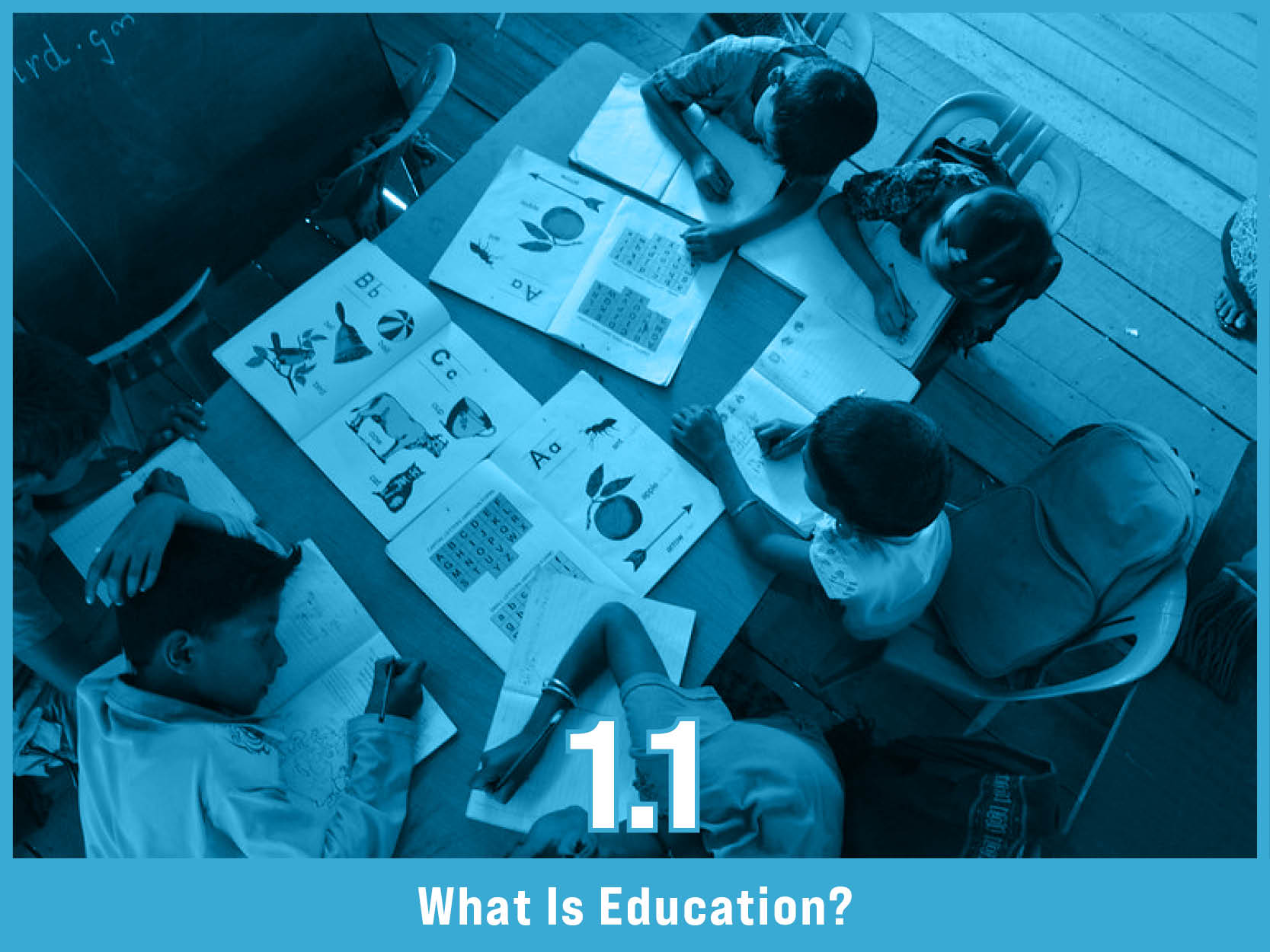
1.1 | What Is Education?

Preview

Before we begin this section, please read the quote below. Do you agree with it or disagree? Why? Do you have any strong beliefs about “education”? What are they?

Nelson Mandela quote about education


Understanding Education

“Education” is the teaching and learning of knowledge, skills, values, beliefs and habits. Sometimes it is compulsory and sometimes it is voluntary. Education can cover basic education from kindergarten to high school, it can include university and higher education as well as technical and vocational training. Education can happen in a classroom, but it can also happen outside the classroom. It may happen with a teacher, but it may be something that is self-guided.

Education is a big idea. The process of education includes lots of individuals – from teachers and students to parents, community members and government officials. The education system that you work in might be quite small, such as a single school, it might be very large, such as a national school system of thousands of schools, or it might be somewhere in the middle.

Studies have shown that the best way to improve the quality of education is to support teachers. This usually happens through continuous professional development and teacher training – giving teachers training so that they improve throughout their careers. Teachers give education to their students but they can also receive education from trainers, books, courses, their supervisors and each other.