Course Content
1 | Introduction to Teaching
In this module, you will read a text and watch video about education and stages of the learning cycle. You will check your understanding with concept-checking questions. For the teaching competency standards that this module aligns to, please download the document from the Resources section.
0/6
3 | School and Community Partnerships (to follow)
Introduction to follow.
5 | Equity and Inclusion in Education (to follow)
This module introduces the concepts of equity and inclusion concepts in education.
6 | Classroom Management
This module invites the teacher to reflect on the good and bad behaviour of the students in their classes and how it can be prevented and managed. We will look at different strategies for how to facilitate positive student-teacher relationships to build better learning environments.
0/11
7 | Diversity and Multicultural Education (to follow)
This module looks at the importance of diversity and multicultural education, and how to successfully manage it.
9 | Stress Management for Resilience (to follow)
This module is an introduction to the issue of stress and how to cope with it in education, to promote resilience in both teachers and their students.
10 | Innovation in Low-Resource Contexts
This module reviews learning objectives, presents ideas for DIY teaching aids and explores different ways the teacher can enhance learning in environments with limited resources.
0/6
11 | Motivation and Engagement
This module explores how teachers can define and enhance their student’s engagement and motivation. It will present a variety of strategies and techniques for how to group learners, how to differentiate for engagement and how to give feedback to improve motivation.
0/9
Private: Foundations of Teaching

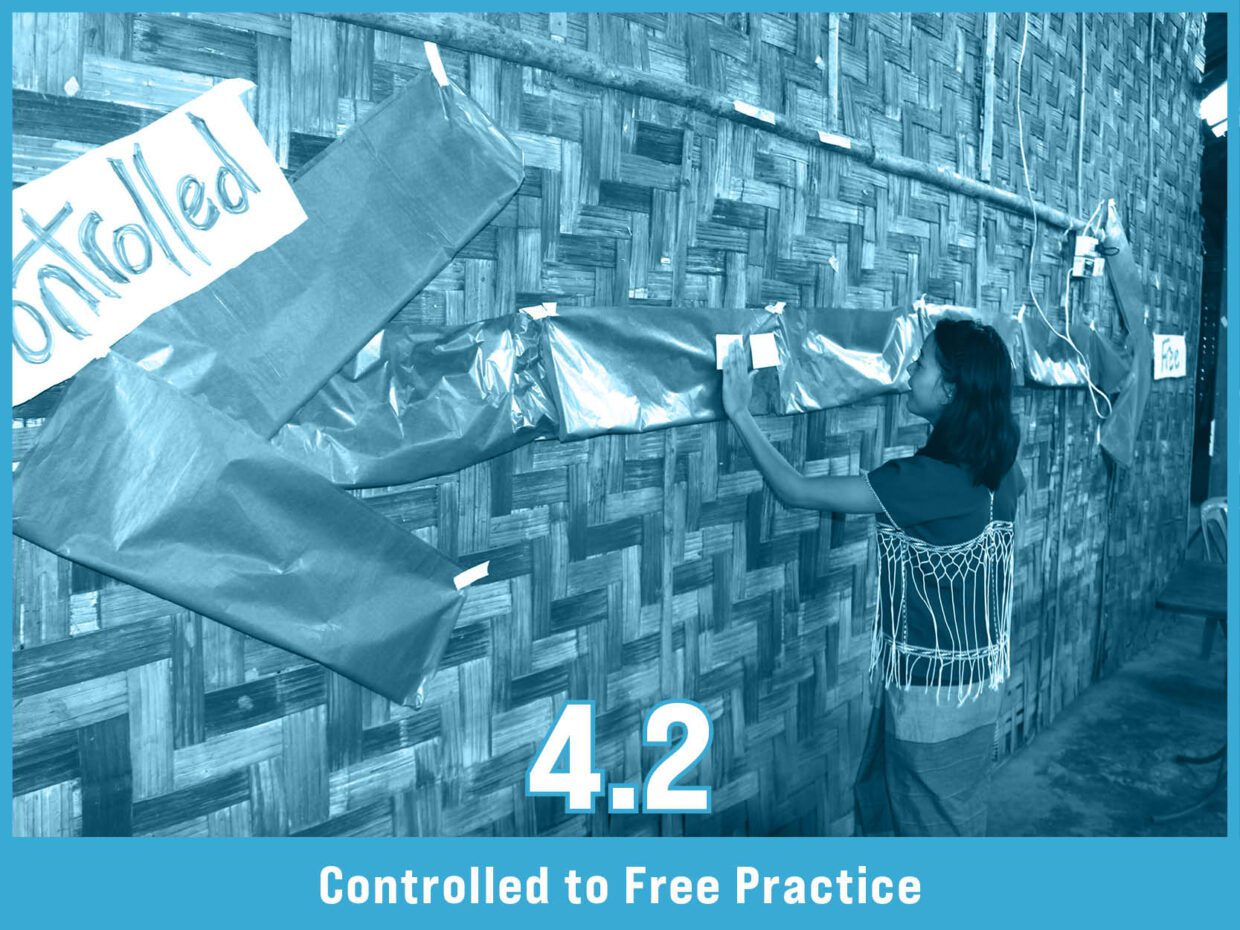
4.2 | Controlled to Free Practice

Preview

Before we begin, read again the definitions of controlled practice and free practice, then read the list below. Decide, for each word in the list, if you think it relates more to controlled practice activities or to free practice activities.

  • Controlled practice – Students do activities that help them understand the new information, skills and ideas.
  • Free practice – Students do activities that help them use the new information and skills, using their own opinions and ideas.

Remembering
Understanding
Applying
Analysing
Evaluating
Creating


Designing Practice Activities

How can you design practice activities to be supportive but also allow the learner freedom to experiment and make mistakes?

Next, you will watch a video about the principle of controlled practice and free practice activities. There will be a quiz at the end.