Course Content
1 | Introduction to Teaching
In this module, you will read a text and watch video about education and stages of the learning cycle. You will check your understanding with concept-checking questions. For the teaching competency standards that this module aligns to, please download the document from the Resources section.
0/6
3 | School and Community Partnerships (to follow)
Introduction to follow.
5 | Equity and Inclusion in Education (to follow)
This module introduces the concepts of equity and inclusion concepts in education.
6 | Classroom Management
This module invites the teacher to reflect on the good and bad behaviour of the students in their classes and how it can be prevented and managed. We will look at different strategies for how to facilitate positive student-teacher relationships to build better learning environments.
0/11
7 | Diversity and Multicultural Education (to follow)
This module looks at the importance of diversity and multicultural education, and how to successfully manage it.
9 | Stress Management for Resilience (to follow)
This module is an introduction to the issue of stress and how to cope with it in education, to promote resilience in both teachers and their students.
10 | Innovation in Low-Resource Contexts
This module reviews learning objectives, presents ideas for DIY teaching aids and explores different ways the teacher can enhance learning in environments with limited resources.
0/6
11 | Motivation and Engagement
This module explores how teachers can define and enhance their student’s engagement and motivation. It will present a variety of strategies and techniques for how to group learners, how to differentiate for engagement and how to give feedback to improve motivation.
0/9
Private: Foundations of Teaching

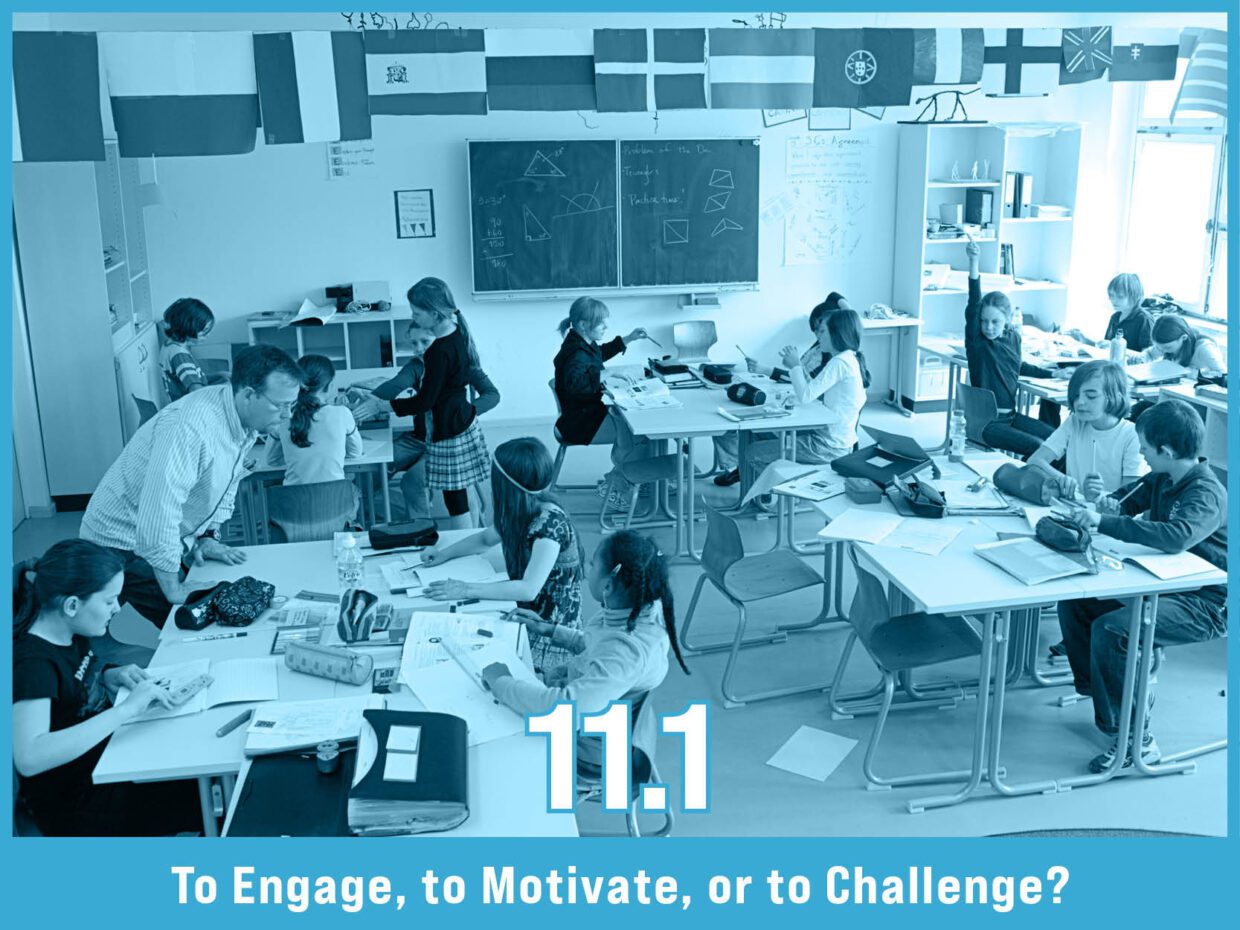
11.1 | To Engage, to Motivate, or to Challenge?

Preview

Before we begin, think about your own motivation and your students’ What kind of learning do you enjoy? What do you think your students enjoy? When you were a student, what were your goals, and why? What are your students’ goals for the year, and for the future? Do you think that classwork is too easy, too difficult or just right for your students?


Understanding Engagement, Motivation, and Challenge

One goal of teaching is to make sure that all students are motivated, engaged and challenged at all times. This will actively involve students in learning.

Students have different motivations for learning. Teachers can support these motivations when teaching. Motivations include:

  • usefulness for future life;
  • pressure from family;
  • approval from teacher and classmates;
  • interest in the topic;
  • enjoying learning new things;
  • wanting good grades;
  • greater self-confidence
  • self- esteem;
  • enjoying interacting with classmates.

Students are engaged with learning when they are actively paying attention and participating. The students feel like they are a part of the lesson. The pacing of the class affects how learners are engaged. Different learning experiences make the class interesting and energising.

Students also need to be challenged. This means that all students are expected to be working hard during the lesson. This involves choosing a variety of activities that use different levels of thinking, frequently asking questions to students and making all students push themselves.