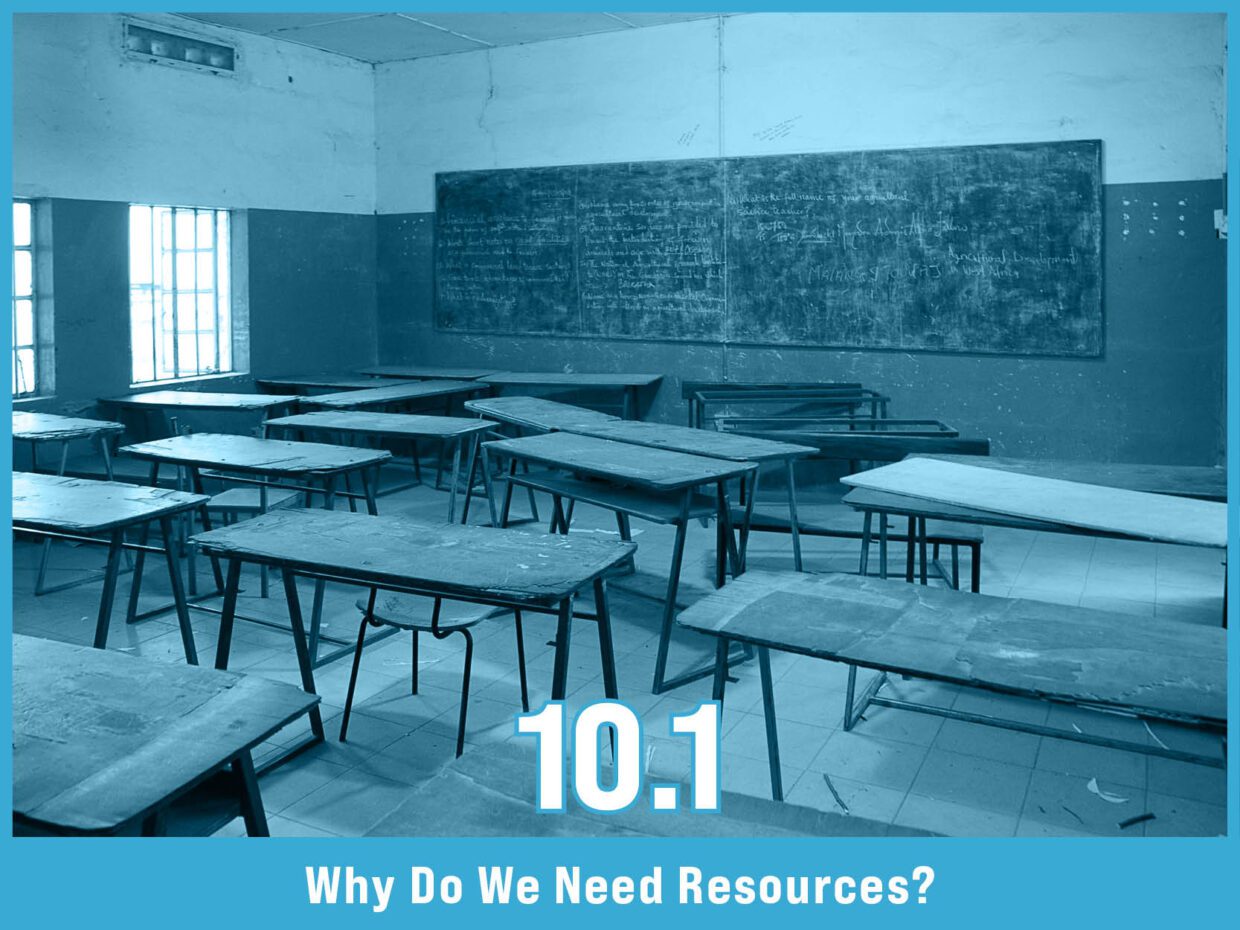
10.1 | Why Do We Need Resources?
Preview
Before we begin, can you remember the stages of the five-stage lesson plan and what the purpose of each is? Think for a moment. When finished, click below to check if you were correct.
Click here for a review of the five-stage lesson plan
- Introduction– Students prepare to study the topic of the lesson and activate prior knowledge they have related to the topic.
- Presentation– Students receive new information, skills and ideas.
- Controlled practice– Students do activities that help them understand the new information, skills and ideas.
- Free practice– Students do activities that help them use the new information and skills, using their own opinions and ideas.
- Review– Students check what they have learned during the lesson.
When planning lesson stages, teachers should identify how long they expect each stage to take. When planning activities for certain stages, teachers should include the time spent giving instructions, doing the activity, checking the answers and giving feedback.
Planning and Resources
In Module 4, we talked about planning and the importance of being prepared for your lessons. There are many things to consider when planning our courses and lessons. These can include:
- The requirements of the institution
- The lesson as a part of a course
- The age of the students
- The purpose of learning
- Students’ needs
- Students’ interests
- Learning preferences
- The physical or online environment
- Activities
- Resources and materials
- Flexibility
- Assessment
In this module, we will look at resources and materials, but more importantly, what teachers can do when they don’t have access to many materials in their classroom.
One of the most important aspects of a lesson, as we learned in Module 4, is the learning objectives. Teachers first need to know what they will teach, and then how they will teach it. Then they can select activities and plan learning experiences. It is very important for teachers to ensure that the activities and learning experiences connect to the learning objectives that they have written.
A teacher should plan which resources and materials they need at each stage. What kinds of resources do you usually use in your daily lessons? What resources do you have access to that can assist teaching and learning in your school?
Think for a moment about the resources that you have available in your school. When finished, click below for some ideas.
Click here for possible resources in a classroom
Possible Resources in a Classroom
- Inside classroom: walls, notebooks, blackboard/whiteboard, audio speaker.
- Outside classroom: trees, football, sand, rocks, birds.